

Hyperscale Interconnection Constraints
Grid Interconnection Delays Reprice Behind-the-Meter Power Assets
5 November 2026
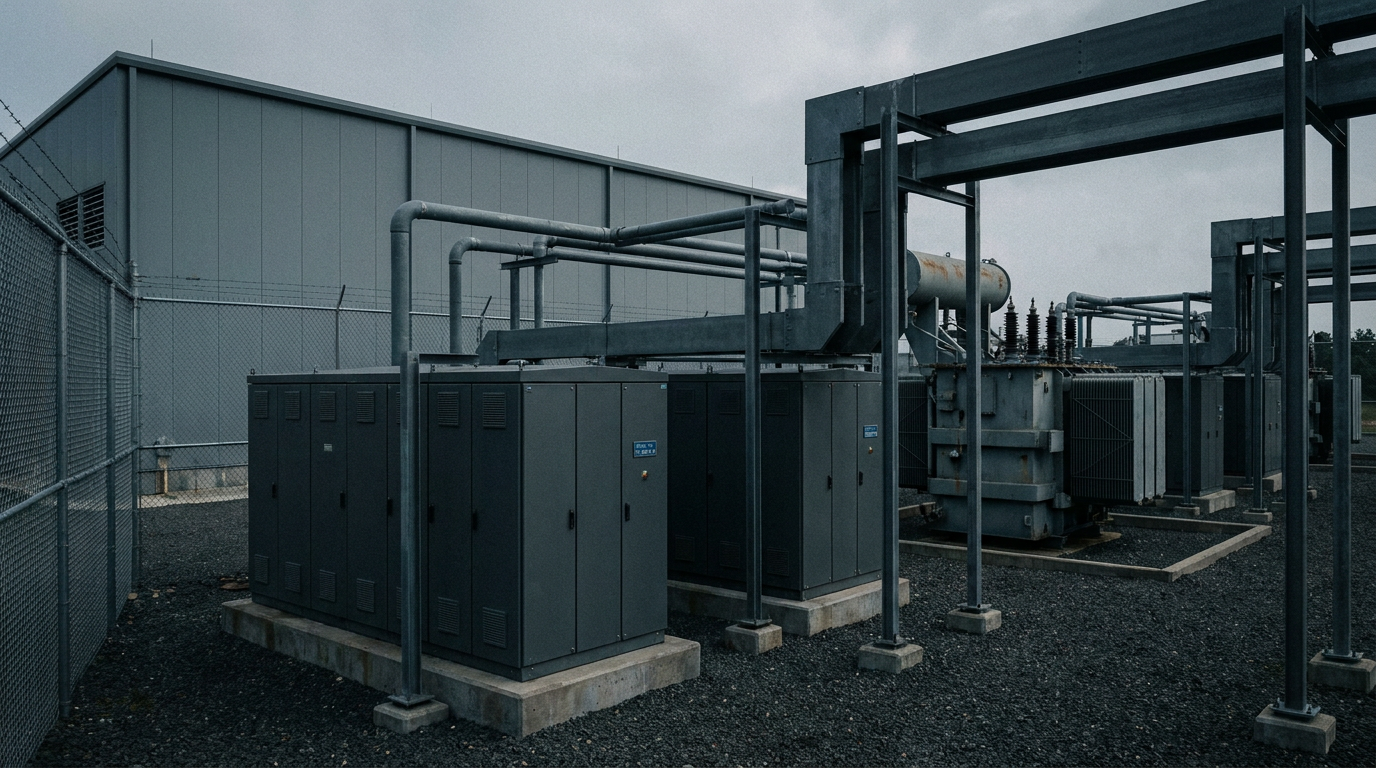
Trading across specialized industrial and clean-energy infrastructure equities yesterday reflected a sharp recalibration of deployment timelines for distributed data-center power generation. As secondary market valuations across high-density computing supply chains contract, capital allocators have begun scrutinizing the foundational assumption that behind-the-meter power generation can seamlessly circumvent saturated regional electrical grids. The pronounced drawdown in dedicated stationary power providers, notably solid oxide fuel cell manufacturers and localized gas turbine vendors, underscores growing institutional recognition that physical engineering and logistical frictions cannot be bypassed through capital allocation alone.
Over the past twenty-four months, hyperscale developers sought to decouple data center expansion from conventional utility interconnection queues by contracting directly with distributed generation providers. With regional transmission organizations such as PJM Interconnection and ERCOT facing queue backlogs stretching four to seven years, modular generation was priced by equity markets as an immediate bridge solution. Developers pursued behind-the-meter configurations—ranging from natural gas-fed fuel cell arrays to dedicated reciprocating internal combustion engines—to achieve rapid energization for high-density compute facilities. However, project updates emerging from core development corridors indicate that these islanded microgrids are encountering their own acute execution delays.
The emerging operational friction stems from an intricate web of supply-chain dependencies and municipal oversight. While modular power units can be fabricated in factory environments, on-site commissioning requires specialized gas compression stations, high-pressure pipeline lateral connections, localized air-quality permits, and bespoke step-up transformer infrastructure. Engineering delays in securing high-voltage switchgear and long-lead gas regulator assemblies have begun pushing commercial operation dates backward by multiple quarters. Consequently, the premium assigned to distributed generation as an accelerated route to market is eroding rapidly under the weight of traditional industrial delivery schedules.
This extension of project timelines has direct implications for return on invested capital across the hyperscale ecosystem. Specialized semiconductor clusters carry steep economic depreciation profiles; any delay in energizing a facility leaves hundreds of millions of dollars in pre-purchased silicon sitting idle in staging warehouses, rapidly consuming their economic half-life before generating revenue. When commissioning milestones for power generation slip, hyperscale operators frequently defer secondary equipment deliveries, causing an immediate volumetric contraction for equipment vendors upstream. The market reaction witnessed over the prior session illustrates how tightly wound these supplier balance sheets are to synchronized site deliveries.
From a credit and structured finance perspective, the repricing extends into private infrastructure debt. Multiple debt facilities established to fund on-site generation infrastructure were underwritten with covenants tied to aggressive operational deadlines and take-or-pay off-take agreements. As project completions drift into later fiscal quarters, debt service coverage ratios during initial operational phases become increasingly compressed, necessitating covenant amendments or sponsor equity injections to preserve project integrity. Institutional debt investors are progressively adjusting their underwriting standards, demanding wider credit spreads and more conservative contingency buffers for off-grid and behind-the-meter compute installations.
For institutional allocators, the repricing of distributed power equipment represents a necessary normalization. The thesis of unprecedented computational demand requiring non-linear energy additions remains fundamentally intact, yet equity multiples had prematurely reflected frictionless execution across complex physical assets. As public and private markets align their expectations with the true cadence of civil engineering, fuel procurement, and high-voltage manufacturing, capital deployment in the sector is shifting from speculative multiple expansion toward rigorous scrutinization of execution capability, regulatory clearance speed, and site-specific infrastructure viability.
This commentary is provided for general information only and does not constitute investment, legal or tax advice.