

Airframe Capitalization Pressure
Commercial Airframe Strains Reshape Aerospace Capital
27 October 2026
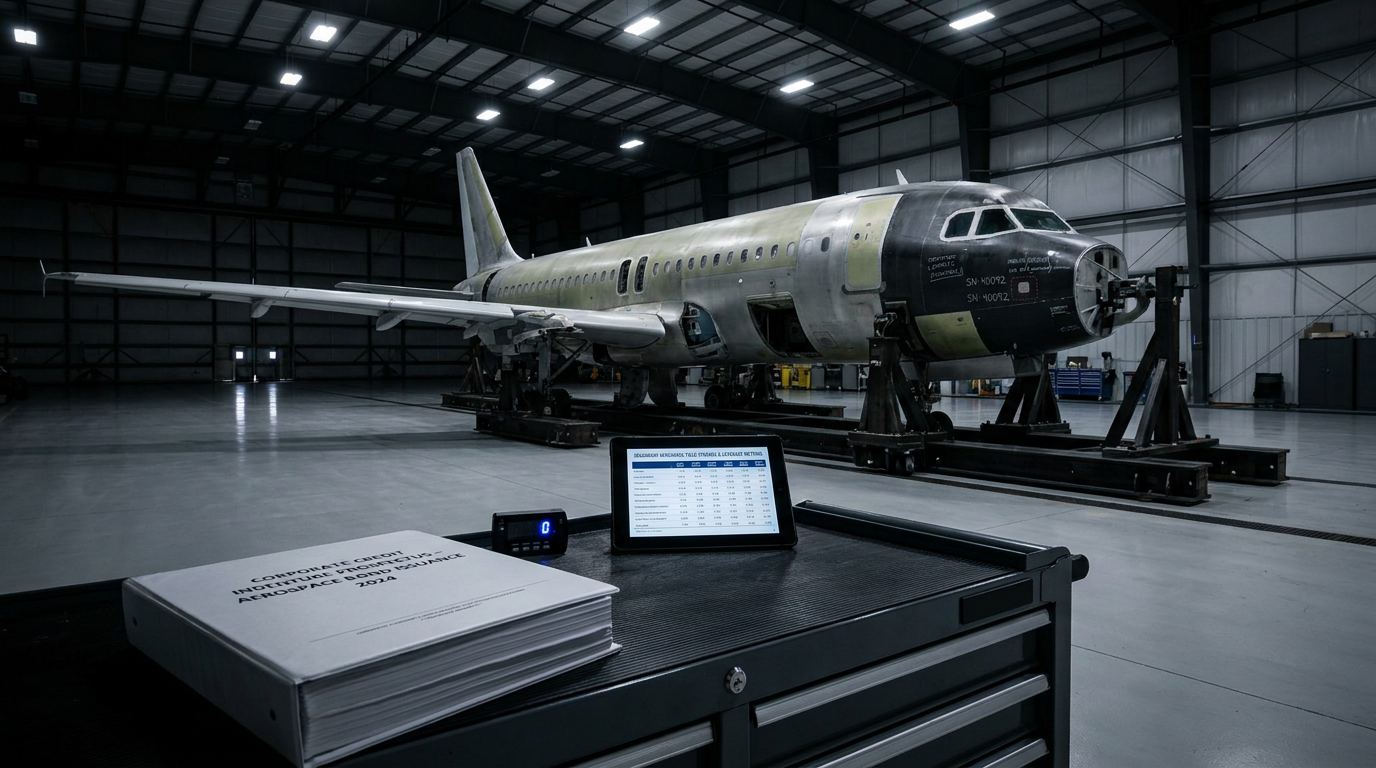
The ongoing compression in commercial aerospace equity valuations—exemplified by yesterday's renewed sell-off across large-cap airframe manufacturers—reflects an acute intersection of manufacturing execution deficits, programmatic charges, and structural balance sheet strain. For institutional capital, the focus has shifted decisively away from multi-year order backlogs toward immediate cash conversion and liquidity preservation. As airframe integrators grapple with mounting fixed-price defense contract losses and protracted assembly interruptions, the risk of rating downgrades toward the non-investment grade threshold is altering underwriting parameters across the aerospace capital structure.
At the core of this capitalization dilemma is the sustained depletion of free cash flow. In an industry characterized by lengthy multi-year manufacturing lead times, the inability to consistently meet delivery milestones creates severe working capital distortions. Unfinished gliders and inventory awaiting specialized components tie up billions in operating cash, transforming working capital from a neutral asset into an active balance sheet encumbrance. When compounded by programmatic delays on next-generation widebody platforms and compounding cost overruns on fixed-price government procurement vehicles, cash burn accelerates to levels that internal earnings generation cannot absorb.
The consequences for fixed income allocations are immediate. Major airframe issuers have traditionally occupied substantial weightings within benchmark investment-grade corporate debt indices. However, persistent debt issuance aimed at financing working capital deficits rather than productive capital expenditure has expanded leverage ratios beyond standard investment-grade tolerance bands. Credit rating agencies have narrowed headroom to the lowest tier of investment grade. A downgrade across these balance sheets would represent one of the largest fallen-angel events in modern credit history, triggering mandatory liquidations by investment-grade-mandated institutional accounts and driving severe spread widening across secondary paper.
To avert an institutional debt reclassification, airframe leadership teams are increasingly compelled to resort to substantial equity and equity-linked capital raises. While programmatic equity issuance offers a buffer against speculative-grade downgrade triggers, it introduces profound equity dilution that recalibrates intrinsic valuation multiples. For institutional equity holders, the trade-off is asymmetric: participation in recapitalization structures protects the senior credit profile and preserves access to commercial paper markets, but it substantially reduces prospective equity cash-flow yields over the remainder of the economic cycle.
Furthermore, the strain at the airframe integrator tier transmits systemic pressure down the aerospace supply chain. Tier-1 and Tier-2 component suppliers, already managing higher financing costs and specialized tooling outlays, find their own inventory velocity impaired by intermittent delivery rates. When prime contractors throttle production schedules or defer receipt of sub-assemblies, supplier working capital locks up, squeezing operational margins across specialized engineering clusters. Unlike prime integrators, mid-tier suppliers possess limited access to public capital markets and often carry leveraged balance sheets that cannot absorb protracted delivery deferrals.
Portfolio allocators are responding by decoupling the long-term secular demand for commercial air travel from prime manufacturer credit profiles. While global passenger traffic and fleet replacement imperatives remain resilient over a ten-year horizon, near-term capital allocation requires heightened discrimination. Institutional portfolios are actively hedging airframe credit exposure, shifting into equipment-trust debt instruments secured directly by operational aircraft, and demanding wider risk premiums across unsecured corporate tranches. The margin for operational error has collapsed, leaving balance sheet restoration as the sole metric dictating corporate valuation.
This commentary is provided for general information only and does not constitute investment, legal or tax advice.