

Petroleum Options Skew
Petroleum Options Skew Steepens Amid Gulf Geopolitical Frictions
23 October 2026
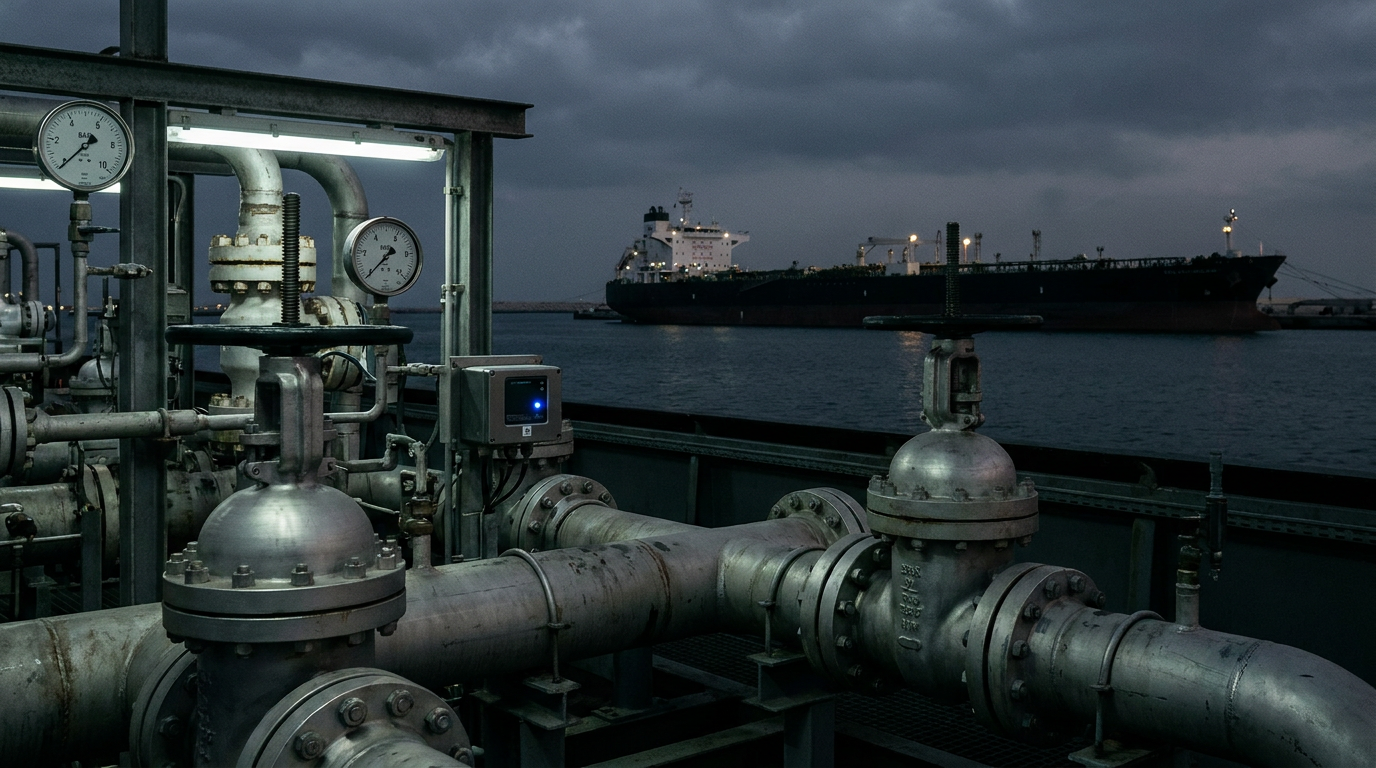
Trading across global energy complexes on Thursday underscored a pronounced structural shift in risk positioning, as market participants aggressively recalibrated exposure to Middle Eastern supply contingencies. Front-month ICE Brent and NYMEX West Texas Intermediate contracts experienced heightened intraday volatility, driven less by immediate changes in observable physical inventories than by an abrupt widening in upside tail-risk pricing. Derivatives desks reported an accelerating bid for out-of-the-money call optionality, reflecting growing concern that anticipated military strikes involving Iran could rapidly disrupt transit corridors or upstream extraction infrastructure in the Persian Gulf ahead of the weekend.
This pricing asymmetry was most visible in the petroleum options volatility surface. Traditionally, crude oil options exhibit a put skew, as commercial producers and sovereign entities routinely purchase downside protection against macroeconomic demand deceleration. Over recent sessions, however, this dynamic inverted entirely. The 25-delta call skew on second-month Brent traded at its most pronounced premium over equivalent downside puts in several quarters. Institutional hedgers and consumer-facing commodity desks have demonstrated an acute urgency to secure convexity against an abrupt geopolitical supply shock, overriding the prevailing macroeconomic narrative of soft global manufacturing demand.
Physical logistics markets are already transmitting these financial frictions into commercial shipping terms. Marine hull underwriters in London and Scandinavia have revised additional war-risk premiums for vessels navigating the Strait of Hormuz and the Gulf of Oman. These freight surcharges, alongside elevated bunker fuel costs, are widening landed crude differentials for refineries in Northwest Europe and the Mediterranean. Physical refiners face an expanding gap between official selling prices set by regional state producers and the actual delivered cost of marginal barrels, squeezing run margins and prompting procurement desks to tap regional spot inventories rather than commit to exposed maritime transit routes.
Compounding these market dynamics is the temporal proximity of the United States midterm elections. The domestic political sensitivity of retail fuel prices historically invites speculation regarding policy intervention. However, institutional observers note that policy levers to mitigate an acute supply dislocation are markedly constrained. The United States Strategic Petroleum Reserve remains well below its historical capacity following extensive drawdowns in previous cycles, limiting the credible scale of any stabilizing intervention. Furthermore, the capacity of commercial inventories in major OECD hubs to absorb an unhedged disruption remains tightly bounded, leaving market clearing entirely to the prompt price mechanism.
The broader implications for multi-asset portfolios are significant. An unhedged escalation in crude prices represents an asymmetric stagflationary threat, capable of disrupting the trajectory of monetary easing anticipated across major central banks. For Swiss and European asset allocators, rising prompt energy costs threaten to re-anchor sovereign inflation breakevens at higher baseline levels, complicating duration allocations and putting renewed pressure on defensive equity sectors dependent on low discount rates. Under these conditions, direct energy convexity has ceased to function merely as a sector-specific tactical trade, evolving instead into an indispensable cross-asset hedge against systemic geopolitical tail risks.
This commentary is provided for general information only and does not constitute investment, legal or tax advice.