

Industrial Silver Liquidation
Industrial Silver Liquidation Reflects Manufacturing Deceleration
17 October 2026
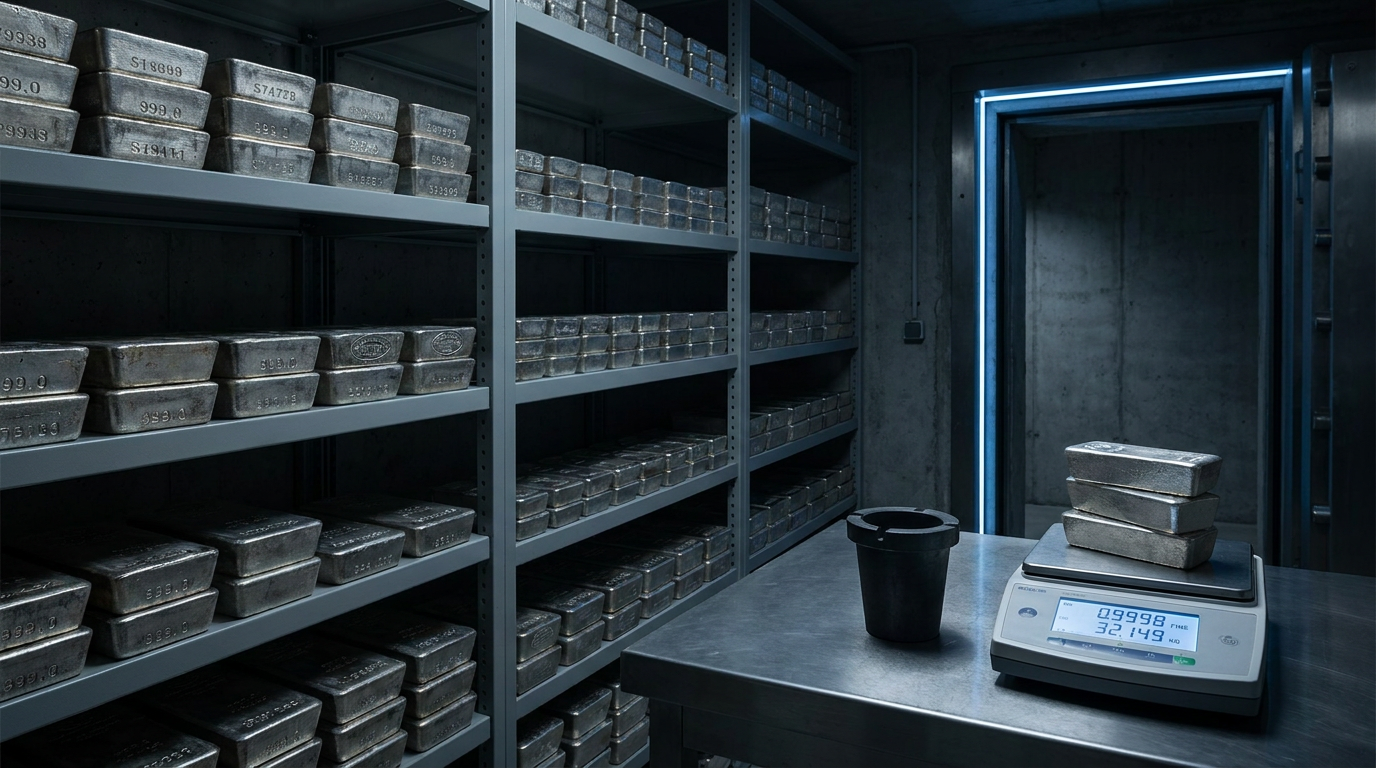
The conclusion of trading on Friday brought into sharp relief a pronounced liquidation across precious and semi-industrial metals, led by a structural repricing in silver. Having shed roughly half of its valuation since reaching historic highs earlier in the cycle, the metal closed the week under sustained selling pressure across both prompt cash and forward derivatives markets. While market participants initially treated the descent as a standard speculative shakeout following an overheated advance, the persistence and velocity of the decline increasingly reflect a substantive retrenchment in physical end-use demand, presenting institutional allocators with a reliable barometer of broader industrial cooling.
Unlike gold, which continues to derive support from structural central bank reserve diversification and sovereign balance-sheet hedging, silver occupies an inherently dual identity. More than half of annual physical fabrication demand is tied directly to industrial processes, primarily high-efficiency photovoltaic cell manufacturing, automotive electronic architectures, and electrical contact metallurgy. The preceding multi-quarter rally was largely predicated on projected structural deficits driven by accelerated capital expenditures in renewable power infrastructure. However, downstream data from Asian solar manufacturing corridors over the past month reveal severe margin compression, high inventories of finished modules, and a subsequent curtailment of ingot slicing and metallization operations.
This softening of industrial off-take has reverberated directly through wholesale warehousing hubs. Physical stocks registered in London Bullion Market Association vaults and COMEX-approved depositories, which experienced consistent outflows during the preceding speculative expansion, have begun to stabilize as unallocated metal returns to exchange storage. The forward curve has mirrored this shift in physical availability: prompt tightness that previously sustained periodic backwardation has collapsed into a pronounced contango, reflecting surplus carrying costs and elevated commercial financing rates. As industrial buyers shift to destocking strategies and reduce order sizes to immediate run-rate requirements, the speculative bid has lacked the baseline commercial demand necessary to absorb secondary liquidations.
Intermediaries and futures clearinghouses have responded by adjusting initial and maintenance margins, triggering secondary waves of mechanical liquidation among systematic trend-following strategies and commodity trading advisors. For multi-asset allocators, the severity of the unwind challenges the convention of treating broad precious metals complexes as homogeneous monetary hedges. The performance divergence between gold and silver has widened to multi-year extremes, demonstrating that during phases of synchronized manufacturing slowing, industrial commodity fundamentals invariably override pure monetary narratives.
The broader macroeconomic read-across from the silver complex warrants close observation. Historical cycles demonstrate that sharp downturns in dual-nature industrial commodities often lead broader baseline indicators, prefiguring soft patches in manufacturing purchasing managers indexes and intermediate capital goods orders. The synchronicity of silver's decline with persistent weakness in downstream chemical precursors and freight volumes suggests that end-market consumption in capital-intensive sectors is decelerating under the cumulative weight of restrictive monetary conditions and elevated inventory financing costs.
For institutional balance sheets, this structural repricing reinforces the discipline of disaggregating commodity factor exposures. Broad-brush allocation strategies that blend cyclical industrial inputs with sovereign monetary hedges risk unintended factor concentration precisely when macroeconomic momentum softens. As fourth-quarter corporate earnings commence and capital expenditure guidance is recalibrated, the liquidation across the silver complex serves as an unvarnished indicator that global supply chains are adjusting to a lower clearing velocity.
This commentary is provided for general information only and does not constitute investment, legal or tax advice.